Artificial Intelligence In Fashion Industry is coming whether we want it or not. The cornerstone of the upcoming technology, Artificial Intelligence, has universally shifted the perception of simplicity and convenience. The fashion industry increasingly relies on AI to support designers, manufacturers, retailers, and customers. Together, they are shaping a smarter and more forward-thinking future for fashion. A fashion enthusiast is exploring the realm of virtual try-ons, 3D modelling, and 360° views of their clothing pieces. Artificial Intelligence helps fashion professionals turn ideas into realistic visuals and detailed sketches. This allows tech pack designers to see their designs from new perspectives and create more accurate, production-ready specifications.
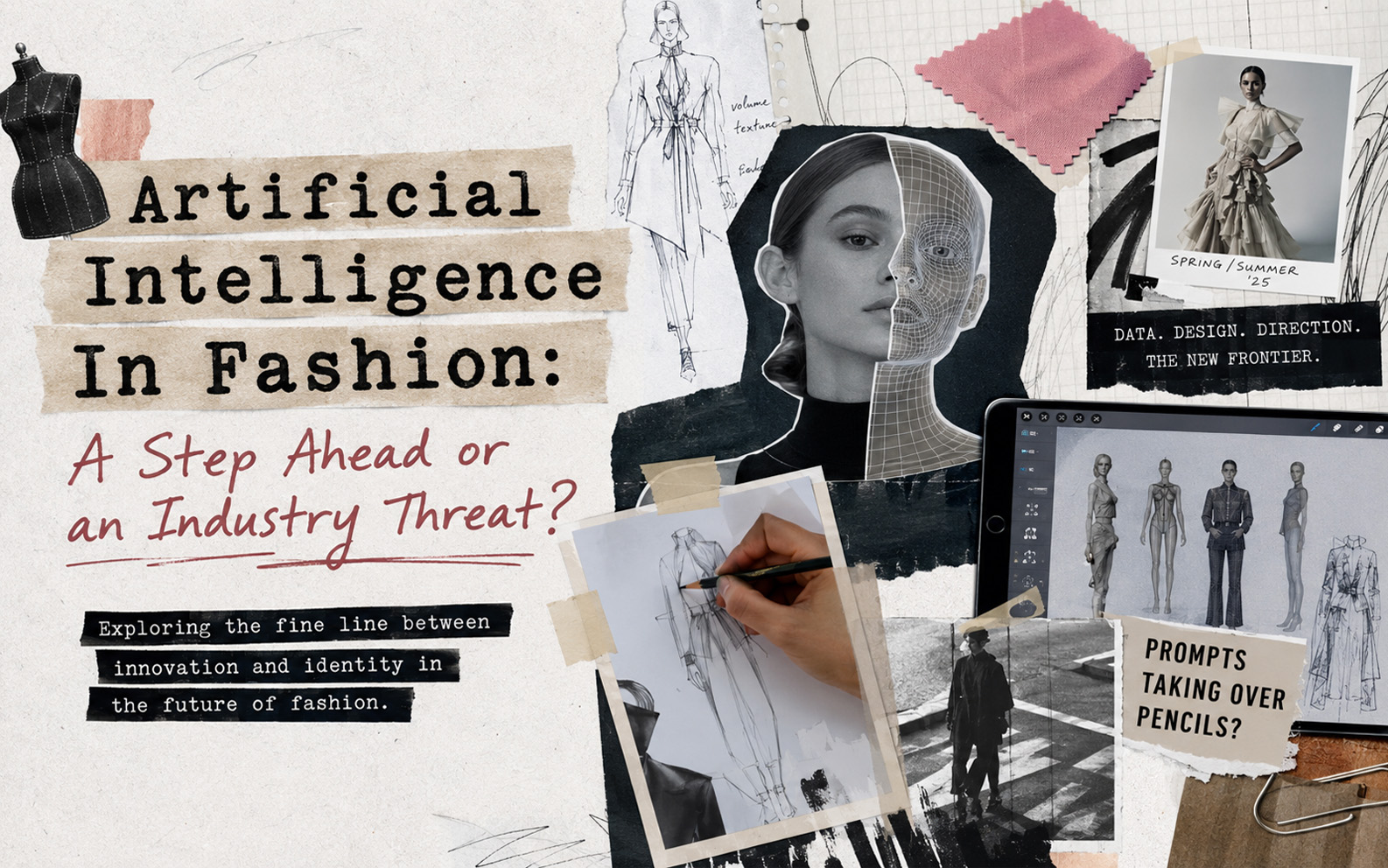
However, with this new introduction, are we facing a tug of war of creativity with technology? Let’s find out.
Glittery Perception: Artificial Intelligence In Fashion Distorting Consumer POV
Traditionally, fashion originated from the genius brain of one, which is brainstormed into creation. AI is changing how people shop for fashion. Consumers can now generate and explore designs tailored to their tastes, creating a stronger demand for unique and personalized pieces. Consumers have a keen eye for finding newness, and with the digital introduction, this search has only intensified. Here are some ways that AI is distorting the fashion industry from the consumer’s point of view.
-
Automated Designs:
Fashion is more than fabric and construction; it reflects a designer’s ideas, experiences, and creativity. AI can generate countless design variations, but only human designers can infuse fashion with personality, purpose, and emotional resonance.
-
Homogenous Data:
Fashion is all about being different and unique. With prompts, consumers may rely on fed data to deliver unique designs. AI excels at processing information and generating design variations. Human designers, however, bring emotion, intuition, and lived experiences that give fashion its true identity and meaning. These human qualities often drive the originality and innovation that define great fashion.
-
Impersonation of Trends:
Today, AI can transform a simple design reference into multiple variations within minutes. By streamlining the design process, AI enables smaller brands to develop and market fashion products more efficiently. As a result, consumers are beginning to redefine their expectations of exclusivity, accessibility, and innovation.
Prompts Taking Over Pencils
Every fashion piece reflects thoughtful decisions about aesthetics, consumer appeal, and its potential influence on the fashion industry. They often revise and refine every detail, sometimes redrawing the same line many times before achieving the desired result. AI, however, can generate polished designs within seconds and create the impression of perfection with only a few prompts. AI offers speed and convenience, but it also challenges traditional ideas of creativity, craftsmanship, and artistic ownership.
-
Generative Designs:
What once required extensive time, effort, and creative exploration can now begin with a few simple prompts. AI can quickly generate design concepts, significantly accelerating the path from idea to production.
-
Forecasting Trends:
Traditionally, fashion was set by the designers on the basis of intuition, generational influence, and other aesthetic factors. Conversely, AI uses algorithm-based statistical forecasting to predict trends that may or may not be useful.
-
Fashion Prototyping:
Prototyping and pattern development have traditionally depended on a designer’s knowledge and experience. AI-powered tools streamline prototyping and pattern making by reducing manual work and accelerating design development. This is reshaping the way fashion products are designed and produced.
Competition or Companion?
Although Artificial Intelligence may appear to compete with fashion designers, the two can work together effectively. AI excels at processing data, generating ideas, and automating repetitive tasks, but its outputs are limited by the information it learns from. Artificial Intelligence enables us to use the virtual fashion technology to test their creative design ideas. Designers, on the other hand, bring creativity, experience, intuition, and cultural understanding that AI cannot replicate. By combining human creativity with AI-powered tools, fashion professionals can enhance their workflow, explore new possibilities, and create truly distinctive products. Rather than replacing designers, AI serves as a valuable partner that supports innovation and efficiency. Here are some of the key reasons why designers and brands can confidently incorporate AI into their projects.
-
Idea Generation:
When working on multiple projects or major projects, designers often need more inspiration or ideas to connect the dots and create their best work. In such cases, having AI provide suggestions gives designers a broader perspective and new ideas to work with. When designers are in a dilemma with trends, having an AI with a reliable database to provide swift information can be of great help.
-
Helper to Traditional Methods:
The industry has a fair share of employees who are dependent on traditional methods and repeat the same routine over and over. Artificial Intelligence In Fashion can streamline some of those tasks, maintaining a log of the tasks to cut time and effort as much as possible.
-
Experimentation:
When a designer concludes with a design, the doubt of whether it will work out or not may hover over their head. In such instances, having AI generate realistic models that offer a clear picture of the fabric texture or clothing over different parts of the body gives room for designers to improvise and create stunning works.
-
Sustainable Practices:
To continue the previous point, AI designers save paper and fabric waste. They help you optimise material usage and, if necessary, keep track of the resources you use and dispose of for healthier and more sustainable design practices.
-
Augmented Realism:
Designers can enhance creativity by bringing realism to their designs by using augmenting tools. Augmented reality turns fashion into an experience rather than just a product. It guides users through the designer’s mind, revealing the story and inspiration behind every design.
-
Speed the Process and Feedback:
With digital tools, you can quickly visualize your designs and refine them through simple commands. This significantly reduces the time required for development and revisions. Furthermore, you get feedback on the virtual project, enabling you to post it into threads once it is approved.
Verdict: Artificial Intelligence In Fashion Can Coexist In Peace
Fashion consumers are becoming aware that excessive dependence on AI-generated designs can create a sense of monotony. Designers add the creativity and personal perspective needed to produce truly original fashion. As mentioned earlier, emotions and feelings attached to a design and dress are what make it wearable and trendy. Thus, the fear of AI misconstruing perceptions is a far thought.
Fashion designers and enthusiasts bring ideas to life through creativity and expertise. They drive innovation and set new trends. AI streamlines repetitive processes and takes over demanding tasks, making the design workflow more efficient.