Sustainable fashion trends continue to shape the future of the apparel industry. Consumers increasingly choose organic clothing that combines style, comfort, and durability. As fast fashion grows, many shoppers seek garments that offer long-term value and timeless appeal. Organic customized clothing has emerged as a popular choice among conscious buyers. This trend celebrates traditional textiles such as Khadi, cotton, and silk handloom fabrics. Skilled artisans craft these fabrics using techniques that reflect India’s rich textile heritage. Although the industry once struggled with limited resources and declining demand, it has regained strong momentum. Today, Khadi fashion and handcrafted apparel attract customers across global markets. People appreciate their authenticity, sustainability, and unique craftsmanship. Many fashion-conscious consumers own at least one handloom garment in their wardrobe. This growing preference highlights the rising demand for eco-friendly fashion and responsibly made clothing.
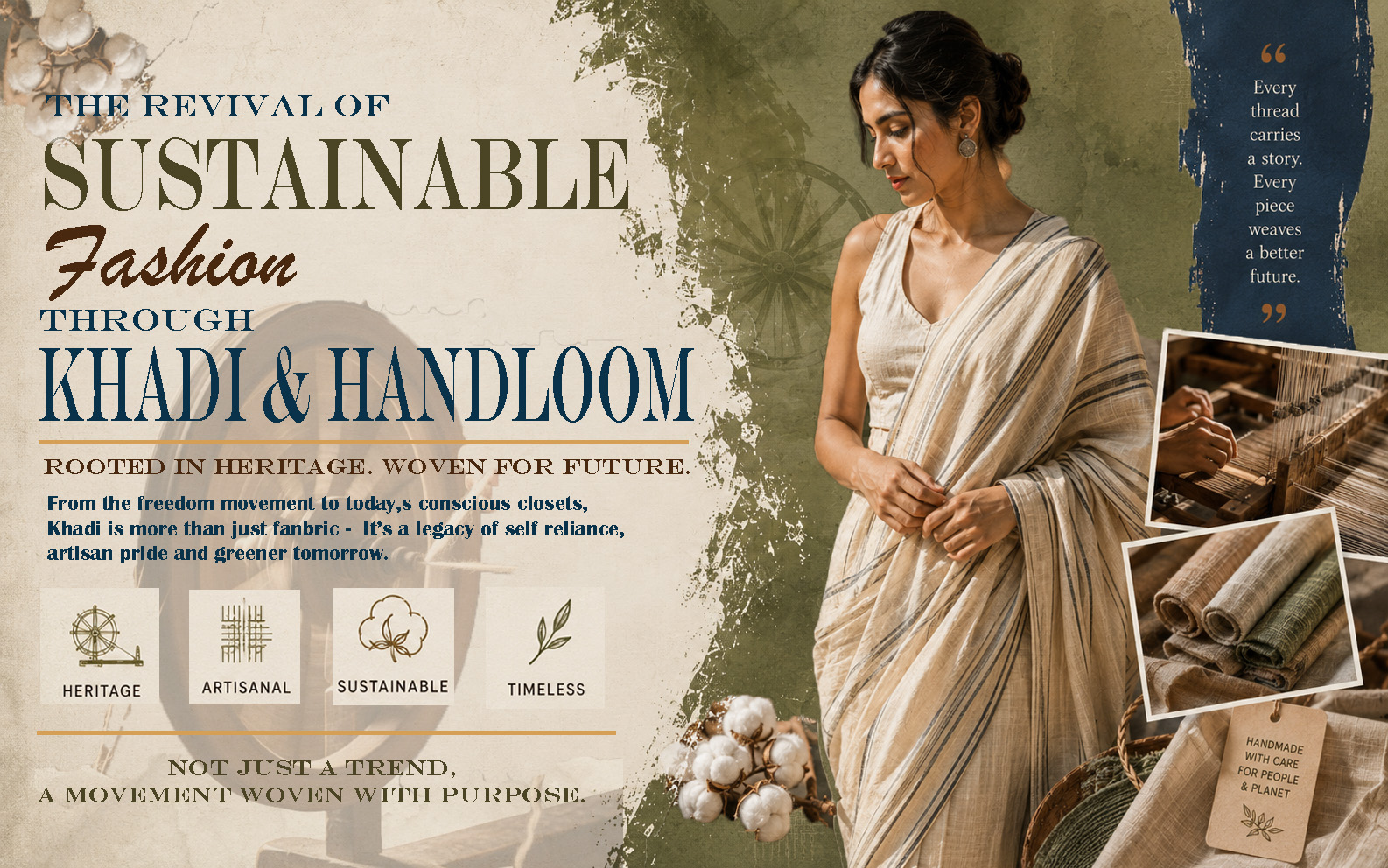
Khadi represents India’s rich heritage of sustainable and ethical textile craftsmanship. During the freedom movement, Mahatma Gandhi embraced Khadi as a symbol of self-reliance and national pride. The fabric played a vital role in India’s journey toward independence. Beyond its historical significance, Khadi reflects the values of sustainability, simplicity, and skilled craftsmanship. Its decline over the years and its remarkable revival deserve greater attention. Today, Khadi stands as a powerful example of how traditional handloom fabrics can thrive in modern sustainable fashion trends.
Birth of Hand-Spun Khadi Textiles
Khadi stands as one of the most powerful symbols of India’s freedom movement. Its history reflects a journey of resilience, self-reliance, and sustainable craftsmanship. Long before the struggle for independence, artisans across India produced Khadi using simple spinning and weaving tools. They crafted high-quality cotton, silk, and wool fabrics that offered comfort, durability, and breathability. These handloom fabrics became an essential part of India’s rich textile heritage.
Khadi gained national prominence during the freedom movement. At that time, British manufacturers flooded Indian markets with machine-made textiles and imported garments. Mahatma Gandhi encouraged people to spin and wear Khadi as an act of economic independence and national unity. He transformed Khadi fashion into a powerful symbol of resistance against foreign goods and industrial dominance.
The movement inspired millions to support local artisans and traditional textile production. As demand grew, Khadi became more than clothing. It represented self-sufficiency, cultural pride, and economic empowerment. This historic shift laid the foundation for many sustainable fashion trends that continue to influence conscious consumers today. The principles behind Khadi remain closely aligned with modern values of organic clothing, eco-friendly fashion, and sustainable clothing.
Post-Independence Growth and Decline of Khadi Textiles
After independence, Khadi remained a powerful symbol of national pride and self-reliance. Mahatma Gandhi’s vision continued to inspire people from all walks of life to embrace hand-spun and handwoven textiles. As a result, Khadi became a significant part of India’s textile industry. Artisans produced sustainable, comfortable, and durable clothing suitable for diverse climates and cultural preferences. They sourced natural fibers locally and transformed them into timeless garments through skilled craftsmanship.
The Indian government recognized the importance of preserving this heritage. It established institutions, introduced development programs, and provided subsidies to support artisans and handloom communities. These efforts helped sustain Khadi production and protected traditional weaving practices for several decades.
Despite this support, Khadi gradually lost market share as industrialization accelerated. Machine-made fabrics offered greater variety, lower prices, and faster production cycles. As global fashion trends evolved, consumers increasingly shifted toward mass-produced clothing. This transition reduced the visibility and commercial appeal of Khadi fashion among younger generations.
Organizations such as the Khadi and Village Industries Commission (KVIC) worked to revive interest in handloom fabrics. They improved accessibility, promoted artisans, and encouraged wider adoption of Khadi products. However, these initiatives achieved only modest results during the early years.
Modern Approach to Adapt Traditional Handloom as Sustainable Fashion Trend
The landscape began to change dramatically in 2014. A renewed focus on sustainable fashion trends, local craftsmanship, and ethical production created fresh opportunities for Khadi. This shift marked the beginning of a remarkable revival that reintroduced Khadi to a new generation of conscious consumers seeking organic clothing, eco-friendly fashion, and sustainable apparel.
Many apparel brands now embrace the challenge of bringing India’s rich handloom and handicraft traditions into contemporary fashion. They combine traditional craftsmanship with modern silhouettes to create products that appeal to today’s consumers. This approach not only preserves cultural heritage but also strengthens the position of sustainable fashion trends in the global apparel market.
According to Scripto Graphics, a fashion studio and apparel tech pack service provider, brands that focus on handloom fabrics and traditional textiles often generate stronger consumer engagement than collections made from synthetic materials. Modern shoppers increasingly value authenticity, craftsmanship, and sustainability when making purchasing decisions.
Several emerging brands have successfully built their market presence by reimagining traditional fabrics and artisanal prints for contemporary lifestyles. Brands such as TOSA demonstrate how innovative design can transform heritage textiles into fashionable, everyday apparel. Their success highlights a growing consumer preference for organic clothing, handcrafted products, and ethically produced garments.
This shift reflects a broader movement toward eco-friendly fashion and sustainable apparel. Conscious consumers now seek clothing that aligns with their values while offering quality, comfort, and uniqueness. As demand continues to grow, handloom fabrics and traditional craftsmanship are becoming key drivers of the modern organic customized clothing market.
Revival of Khadi and Its Modern Appeal As Sustainable Fashion Trend
Several factors fueled Khadi’s revival. Government initiatives highlighted its historical and cultural significance. Consumers also appreciated its comfort, breathability, and artisan craftsmanship. Designers embraced Khadi and handloom fabrics in contemporary collections. They combined ethical production with modern aesthetics. This approach increased Khadi’s popularity and strengthened its market presence. Today, Khadi adapts to changing fashion trends while preserving its heritage. Here are some popular Khadi styles worth exploring.
Collar Khadi Shirts : Khadi shirts blend sustainability with modern style. Their handwoven construction offers comfort, breathability, and durability. Modern collars give these shirts a refined look that suits contemporary fashion.
Khadi Crop Tops : Khadi crop tops combine traditional craftsmanship with current fashion trends. Their soft texture and unique patterns create a distinctive style. They offer comfort and elegance, especially during warmer seasons.
Khadi Ponchos : Khadi ponchos deliver comfort, versatility, and sustainable style. Their lightweight fabric makes layering effortless. Natural textures and artisan craftsmanship add character to every outfit.
Kurtas and Kurtis : Khadi kurtas and kurtis celebrate heritage and self-expression. They suit professional, casual, and festive occasions. Their timeless designs offer elegance without compromising sustainability.
Handwoven Blouses : Handwoven Khadi blouses pair effortlessly with trousers, skirts, jeans, and sarees. They combine heritage with modern sophistication. Their breathable fabric ensures comfort throughout the day.
Future of Khadi in the Indian Fashion Industry
Growing awareness of sustainability continues to drive demand for Khadi. Consumers increasingly prefer eco-friendly fashion and responsibly crafted clothing. Fashion brands, designers, and artisans now champion traditional textiles. Their collaboration strengthens India’s handloom ecosystem and creates new opportunities for artisans. Khadi has evolved from a symbol of freedom into a modern fashion essential. Its blend of heritage, sustainability, and craftsmanship supports its long-term relevance. As sustainable fashion trends gain momentum, Khadi will play a larger role in the industry. Global brands increasingly recognize its value and potential. This growing interest may soon place Khadi on more international runways.